 Ryan Caldwell
Key Takeaways
- U-Line condenser cleaning starts from $75 on a wine cooler, from $120 on a wine fridge and from $180 on a refrigerator.
- The price climbs with the cabinet because professional time rises from about 30 minutes to 1.5 hours up to 1.5 to 2.5 hours.
- You can clean most condensers yourself with a soft brush or vacuum after disconnecting power, but the fins are sharp and easily damaged.
- Keep the grille installed and unobstructed, because a blocked intake recreates the problem.
- Sensor codes such as E1 and E5 are not cleaned away, and the final price is confirmed after on-site diagnosis.
The Bottom Line
Condenser cleaning is one of the cheapest U-Line services, from $75 on a wine cooler, and most owners can do it themselves with a soft brush. Do it before the cabinet runs warm, not after.
U-Line condenser cleaning cost starts from $75 on a wine cooler, from $120 on a wine fridge and from $180 on a refrigerator, and the gap between those numbers says something useful about the job. The task itself is the same everywhere: dust packs into the condenser fins behind the front grille, the cabinet loses the airflow it depends on, and cooling slowly declines. What changes is how hard the cabinet is to reach and how many owners can do it themselves.
| Cabinet | Starting price for the service | Professional time | Site estimate of DIY share |
|---|---|---|---|
| Wine cooler | from $75 | 30 minutes to 1.5 hours | About 65 percent |
| Wine fridge | from $120 | 45 minutes to 1 hour | About 50 percent |
| Refrigerator | from $180 | 1.5 to 2.5 hours | About 25 percent |
| Cleaning it yourself with a soft brush or vacuum | No parts, no fee | Your own time | Where the grille is easy to remove |
How Much Does U-Line Condenser Cleaning Cost?
From $75 for a wine cooler, from $120 for a wine fridge and from $180 for a refrigerator, with the final price confirmed after the technician completes an on-site diagnosis. You receive a written estimate before any work begins. These are starting figures for the service that this site lists against each condenser entry, and they cover cleaning the condenser area rather than repairing a fan or a sealed-system fault you did not know you had.
Condenser cleaning is one of the cheapest services on a U-Line cabinet, and also the one most often skipped, because the symptoms arrive slowly. A cabinet that takes a little longer to cool, a compressor that seems to run more than it used to, a wine zone that has drifted a degree or two: none of it feels urgent until the cabinet is clearly warm. By then, the cheap job has often turned into a diagnostic visit.
Why Does the Price Climb From a Wine Cooler to a Refrigerator?
Because the refrigerator takes longer and is harder for an owner to do alone. The site's own estimates put professional time at 30 minutes to 1.5 hours for a wine cooler and 1.5 to 2.5 hours for a refrigerator, and only about a quarter of refrigerator condenser jobs as DIY-fixable against about two thirds for a wine cooler. A bigger cabinet, a deeper toe-kick and often a bulkier installation all add time.
- Access — the grille on a built-in refrigerator is part of a larger installation than a wine cooler grille.
- Time on site — more cabinet to clean around, and more to put back afterwards.
- DIY comfort — fewer owners are happy to pull a refrigerator out far enough to work on it.
Can You Clean a U-Line Condenser Yourself for Free?
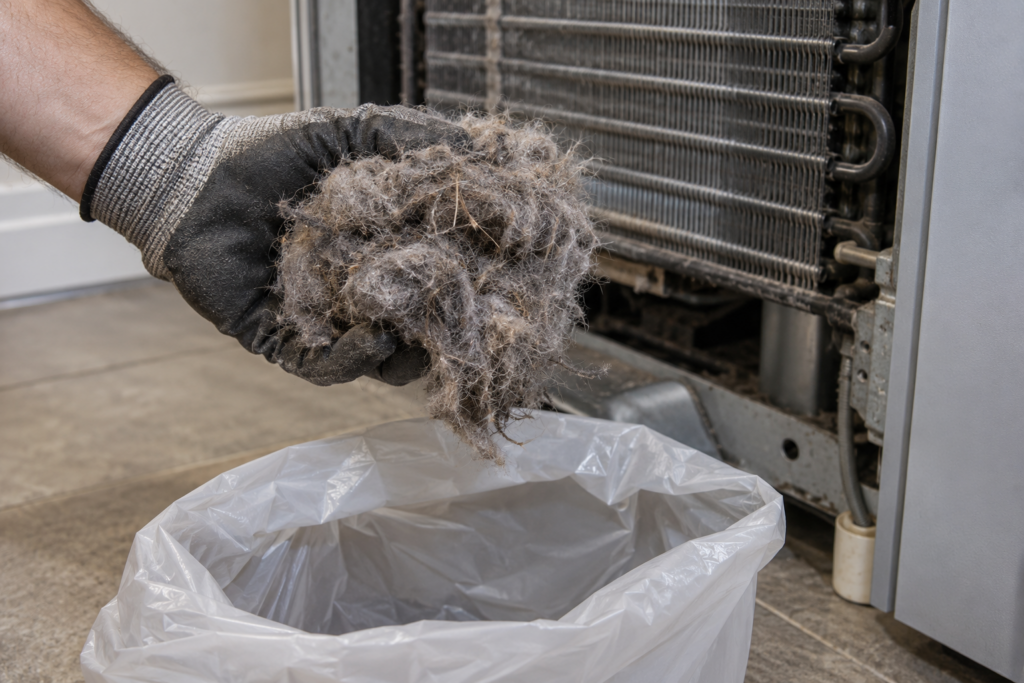
Yes, on most cabinets, and the manufacturer's own guidance describes how. Disconnect power, remove the grille safely, and clean the condenser with a soft brush or a vacuum, never with harsh cleaners. The fins are the one hazard: U-Line warns that they are sharp and easily damaged, so keep your hands and tools off them and let the brush or the vacuum do the work.
- Disconnect power first. Unplug the cabinet or switch it off at its supply before the grille comes off.
- Remove the grille without forcing it. It is the front intake, and it needs to go back exactly as it came off.
- Vacuum or brush the dust off the fins. The dust that matters sits behind the opening, not on the grille itself.
- Replace the grille and restore power. Leave the cabinet undisturbed for a day, because wine and food recover slowly.
The grille has to be back on afterwards. U-Line's installation guidance is to keep the grille installed and unobstructed while the cabinet runs, so a decorative toe-kick change or a blocked intake can recreate the problem within weeks, whatever you did to the coil.
What a Dirty Condenser Looks Like Before You Pay
The signs are consistent across the cabinets, and noticing them early keeps the cost at the cheap end. Each describes a cabinet that has to work harder to reject heat, because the condenser is the part that gets rid of it.
- Lint at the front grille — visible dust is the earliest hint of what is behind it.
- Longer cooling cycles and longer runtimes — the compressor is running more to compensate.
- Warm or uneven storage zones — on wine cabinets, the zone furthest from the evaporator drifts first.
- Chronic weak cooling after a toe-kick change — a blocked intake is as bad as a dirty coil.
If those are present, cleaning is the right first step and the cheapest one. If a code such as E1 or E5 is showing alongside a warm cabinet, cleaning will not clear it and the cost conversation moves to the sensor circuit, which our U-Line wine cooler WARM-ZN guide explains. The routine that prevents the problem is in U-Line wine coolers maintenance and U-Line refrigerator maintenance.
How Often Does a U-Line Condenser Need Cleaning?
At the interval in your manual, or sooner in dusty conditions, and a monthly look at the grille is the habit that tells you which. The site's maintenance schedule for freezers lists a monthly check of the grille and front airflow, and notes that outdoor installations, busy entertaining spaces and homes with pets or a higher dust load need more attention than a quiet kitchen. We do not claim a single interval for every cabinet, because none of the pages documents one.
- Look at the grille monthly — lint that you can see from the front is a reliable sign of more behind it.
- Clean sooner with pets or heavy dust — the fins fill faster than in a quiet kitchen.
- Clean sooner in an entertaining space — a cabinet in a busy bar area works harder and collects more.
The cost of skipping the job shows up elsewhere. A condenser that cannot shed heat makes the compressor run longer, and the compressor is the most expensive single part on these cabinets, as the U-Line compressor repair cost guide sets out. Cleaning a coil is the cheapest insurance against that conversation.
What the Estimate Covers and What It Does Not
The starting prices are for cleaning, and a visit can surface other findings. A condenser fan that has stalled produces the same symptoms as a clogged coil, and a door gasket that no longer seals can run alongside it. The technician checks the airflow path, the door seal and the sensor circuit during the same visit, and tells you what was found before any extra work is done.
- Included: cleaning the condenser area and confirming the airflow path is clear.
- Possible extra finding: a stalled condenser fan or a worn door seal, quoted separately in writing.
- Never guessed: a price for a second repair that nobody has found yet.
For how condenser work sits next to the other costs on a wine cabinet, U-Line wine coolers repair cost and U-Line refrigerator repair cost are the companion pages.
Booking a Cleaning Visit
Tell us which cabinet it is, how long ago the grille was last cleaned and whether the unit sits in cabinetry. Our U-Line preventive maintenance service handles condenser cleaning, and the final price is confirmed after the on-site diagnosis, with a written estimate before any work begins. Schedule a visit or contact us with the model.