 Ryan Caldwell
Key Takeaways
- Cube quality complaints are documented service symptoms on U-Line platforms and none of them puts a code on the display.
- Clear ice machines and crescent machines make ice differently, carry different fault sets, and their symptoms do not translate.
- Thin, small or hollow cubes almost always come back to how much water arrives during a fixed freeze time.
- Scale insulates the freezing surface, so descaling on schedule matters more here than on any other appliance.
- Ice that is good, then bad, then good again is the signature of a machine that is out of level.
The Bottom Line
Read the shape of the ice before you read anything else: thin, small and hollow cubes point at water supply, scale or level, in that order. If the supply is right and the machine is clean and level, the fault has moved to the freeze cycle or the harvest and needs testing.
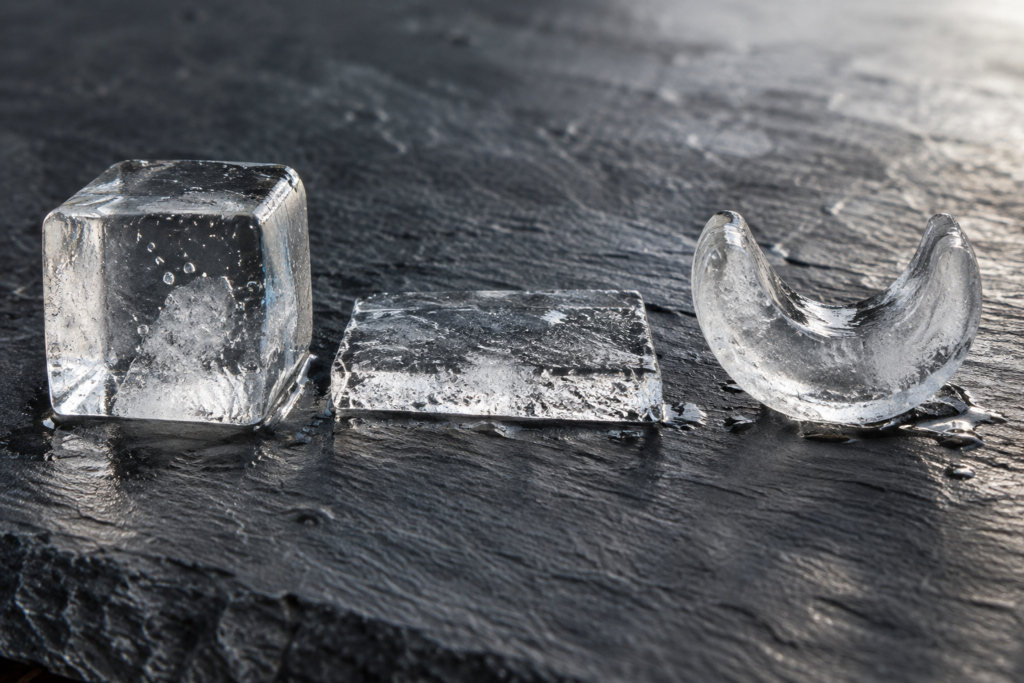
The machine still runs, the bin still fills, and the ice is wrong. Thin slabs instead of solid cubes, crescents with a hollow down the middle, pieces small enough to melt before the glass reaches the table. U-Line documentation treats each of these as a service symptom in its own right, and — this is the part worth knowing before you start searching — none of them puts a code on the display. The machine has no way to tell you the ice is disappointing. You have to read the ice.
| What the ice looks like | Platform | Usual cause | First move |
|---|---|---|---|
| Thin slabs, short of full thickness | Clear ice machine | Cycle cut short or water starved | Check supply and cycle time |
| Cubes fused into a sheet | Clear ice machine | Harvest not releasing cleanly | Clean and descale |
| Hollow crescents | Crescent ice machine | Fill or freeze time off | Check water pressure |
| Consistently small pieces | Either | Restricted fill or scale buildup | Descale, then re-check |
| Good ice, then bad, then good | Either | Unit out of level | Level it and watch a full day |
Know Which Ice Machine You Own
U-Line builds two quite different undercounter ice makers, and the symptoms do not translate between them. Clear ice machines freeze water in layers against a plate and harvest a slab that is then divided, which is why the ice is transparent and why the complaints are about thickness and about cubes that stay joined. Crescent machines freeze in a mold and eject curved pieces, so their complaints are about cubes that come out hollow or undersized.
The two also carry different fault sets. A clear ice machine can show P1 for a drain pump circuit; a crescent machine has no such code. Matching a symptom to the wrong platform is how owners end up chasing a pump that their machine does not have.
Cube Quality Is a Water Story First
Nearly every cube-shape complaint comes back to how much water arrives and how clean it is. Both machines make ice on a schedule: a fixed amount of water is admitted, frozen for a set period, and released. Starve the fill and the cube comes out thin, small or hollow, because the freeze time did not change — only the amount of water did.
- Check the shutoff is fully open. A valve left part-closed after other work under the counter is a classic.
- Look for a kinked or crushed supply line. Built-in units get pushed back into the cavity, and the line goes where it can.
- Change the filter on schedule. A clogged filter is a pressure restriction, and pressure is what fills the mold or the plate.
- Consider water hardness. Hard water leaves scale on the freezing surfaces, and scale insulates — the machine freezes less ice in the same time.
- Run the cleaning cycle. Descaling is not cosmetic on an ice machine; it is the maintenance the cube quality depends on.
The site records the clear ice symptom as THIN-CUBE — ice cubes too thin and the crescent equivalent as HOLLOW-CB — hollow crescent cubes. Both entries say the same thing about the display: no dedicated electronic code is shown.
Level Is Not a Detail on an Ice Machine
A refrigerator that is slightly out of level is an annoyance. An ice machine that is out of level makes bad ice, and it does so unpredictably, which is what makes the fault so frustrating to chase. Water has to sit evenly across a freezing plate or fill a mold consistently, and a cabinet leaning even slightly moves that water to one side.
The symptom pattern is distinctive: good ice for a while, then thin or partial pieces, then good ice again, with no obvious trigger. If that describes yours, level the unit before you change anything else. Our guide to U-Line ice machine leveling covers how to do it in a built-in cavity, where the floor is rarely as flat as it looks.
The Routine That Prevents All of This
Ice machines reward maintenance more than any other appliance in the kitchen, because the product they make is also the evidence of how they are doing. A short seasonal routine keeps cube quality where it should be.
- Descale on the manufacturer's schedule, not when the ice goes wrong. By then the scale has been costing you output for months.
- Replace the water filter on time. Write the date on it, because nobody remembers otherwise.
- Vacuum the grille and condenser. A hot machine freezes slowly and makes soft, small ice.
- Check the level once a year. Cabinets settle, floors move, and the check takes minutes.
- Empty the bin if the machine sits unused. Old ice fuses, and fused ice masks a harvest problem.
When Maintenance Is Not the Answer
If the water supply is right, the machine is level and clean, and the ice is still wrong, the cause is on the cooling or control side: a sensor reading the freeze cycle incorrectly, a harvest that is not releasing, or a refrigerant problem that leaves the plate too warm. None of those is an owner repair, and all of them present exactly like a maintenance problem.
Our U-Line ice machine repair service tests the fill, the freeze cycle and the harvest together rather than treating them separately, which matters because the same poor cube can come from any of the three. Leveling and setup work starts from $85 and cycle or sensor work from $120. The final price is confirmed after the on-site diagnosis, and you receive a written estimate before any work begins. Keep a few of the bad cubes in the freezer and book a visit — showing a technician the actual ice is worth more than any description of it.