 Ryan Caldwell
Key Takeaways
- Disconnect electricity before service or maintenance; unplug or switch off the dedicated breaker.
- Never remove the grounding prong or use a two-prong adapter on a U-Line unit.
- An outlet behind a built-in is easy to forget; check it whenever the unit is pulled out.
- Visible water, a damaged cord, a warm plug or a tripping breaker are reasons to stop and disconnect.
- An electrician corrects the outlet and circuit; a technician diagnoses the unit.
The Bottom Line
Keep a U-Line grounded, never defeat the ground prong, and disconnect power before touching anything behind the grille. Call an electrician for the outlet and a technician for repeated alerts.
A U-Line unit sits in finished cabinetry, near sinks, bars and sometimes outdoors, where water, heat and electricity share a small space. U-Line electrical grounding is the safeguard that keeps a fault from becoming a shock, and the power disconnect is the habit that makes cleaning and service safe. This guide follows the site's grounding and power disconnect notice, which is based on U-Line's own electrical safety instructions, and turns it into things you can check from the front of the cabinet.
| Situation | The risk | What to do |
|---|---|---|
| Cleaning the condenser or grille area | Live parts and moving fans behind the grille | Disconnect power first |
| Plug will only fit with an adapter | An altered or missing ground path | Stop; have the outlet corrected by an electrician |
| Grounding prong removed or broken off | No protective ground | Do not use the unit until it is corrected |
| Water near the unit or the cord | Shock or short circuit | Stop using the unit and disconnect power |
| Moving the unit for service | A cord pinched or stressed | Disconnect first and check the cord afterwards |
Why Does a U-Line Need Proper Grounding?
Because the grounding path gives a fault somewhere safe to go. If a wire inside the unit touches the metal cabinet, a grounded unit sends the current to ground and trips the protection; an ungrounded unit can leave the cabinet itself energized and wait for someone to touch it.
The notice lists the warning signs it wants owners to take seriously: service attempted with power connected, a two-prong adapter in use, an altered grounding path, visible water where it should not be, blocked airflow around the grille area and repeated alerts after approved maintenance steps. The first three are about electricity, and the rest are conditions that make electrical trouble more likely.
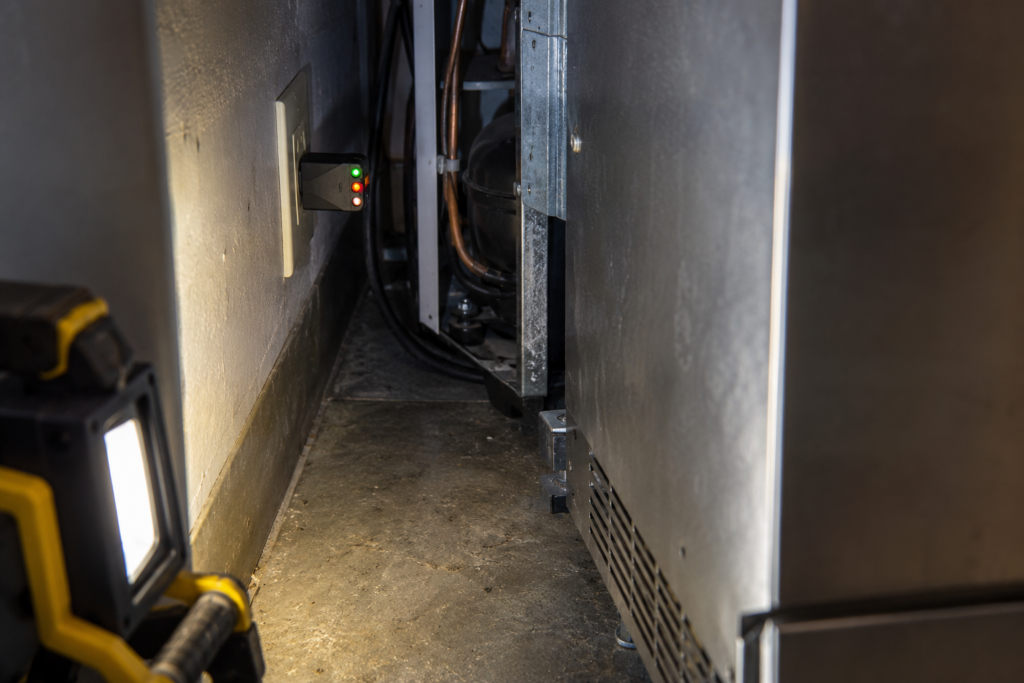
Is It Safe to Use a Two-Prong Adapter?
No. The notice says plainly not to remove the grounding prong and not to use an improper two-prong adapter. An adapter makes the plug fit an outlet that has no ground, and the unit then runs without the protection it was built to have.
- Do not cut or break off the grounding prong to make a plug fit.
- Do not use a cheater adapter or a cord that has lost its ground.
- Do not use an extension cord as a permanent connection for a refrigeration unit.
- Have an electrician add a grounded outlet if the one behind the cabinet is not.
An outlet behind a built-in is easy to forget, so check it the next time the unit is pulled out for cleaning. If you find a two-prong receptacle, that is the time to ask an electrician to correct it.
A quick monthly electrical look takes only a minute and catches most early problems. Check that the plug is fully seated, that the plug and outlet are not warm, that the cord is not crushed behind the cabinet, that nothing stored nearby is blocking the grille, and that no water has appeared under or behind the unit. Any one of these that looks wrong is a reason to disconnect and look closer.
It also helps to know where the breaker is. If a unit has a fault, the person who finds it first may not be the person who installed it, and a labeled breaker turns a stressful moment into a simple one. It costs nothing and is the first thing a technician will ask about.
How Do You Disconnect Power Before Cleaning or Service?
You remove the plug from the outlet, or switch off the dedicated breaker, before you touch anything behind the grille or inside the cabinet. The notice's first action step is to disconnect electricity before service or maintenance.
- Decide how you will disconnect. Unplug if you can reach the plug safely; otherwise switch off the circuit breaker and tell others in the house.
- Confirm the unit is off, with the display dark and the compressor silent.
- Do the work, such as the condenser cleaning described in the condenser cleaning notice, with a soft brush or vacuum.
- Keep your hands away from the sharp fins and the fan; see the sharp fin handling notice.
- Restore power and listen for the compressor to start.
Ice machines add a water line and a drain, so check that nothing is wet before you plug back in; the water hookup leak prevention notice covers the water side.
Special Situations Worth Planning For
Some of the riskiest moments are not failures at all; they are changes. A few of them deserve a pause for a plan.
- Moving or pulling the unit forward. Disconnect first, and check the cord for a pinch or a flat spot when it is back in place.
- After a leak or flood. Do not plug in a unit that has been wet; have it checked first.
- When a plug is warm. That points to a loose connection or an overloaded outlet, and the unit should be disconnected until it is looked at.
- A remodel that touches the wiring. Ask the electrician to verify the grounded receptacle serving the unit before the cabinetry closes up.
A short pause before power is restored costs minutes; a shock or a damaged compressor costs far more. The same applies to ice machines, where a water line and a drain are close to the electrical connection.
When Should an Electrician Look at It?
When the outlet is not grounded, when the plug or cord is damaged, when a breaker trips repeatedly, or when the unit has been wet. The notice leaves correct electrical work to qualified people and tells owners to correct only the safe owner-level items described in the official documentation.
- A breaker that trips when the unit starts.
- A warm or discolored plug or outlet, which suggests a loose connection.
- A cord that is cut, crushed or flattened against the back of the cabinet.
- A shock or tingle when touching the cabinet, which means stop and disconnect at once.
An appliance technician diagnoses the unit; an electrician corrects the outlet and the circuit. The two jobs are separate, and a repeated alert after the basics are done is the cue to book the first. Our refrigerator safety guide and ice maker safety guide cover the wider picture.
Keep one small record for the unit: the model, the date the outlet was last checked and the position of the breaker that serves it. It takes a minute to write, and it is what makes the next disconnect quick and certain, especially when someone other than you needs to switch the unit off in a hurry.
When to Book a Technician
Book when alerts keep returning after the approved maintenance steps, when there is visible water, or when the unit shows signs of an electrical fault. Stop using it if leakage or clear operating instability is present. A diagnostic starts from $95, and the final price is confirmed after the on-site diagnosis, with a written estimate before any repair begins.
The appliance diagnostics page explains what a visit covers, and you can schedule a visit and describe the outlet, the cord and what you noticed.