 Ryan Caldwell
Key Takeaways
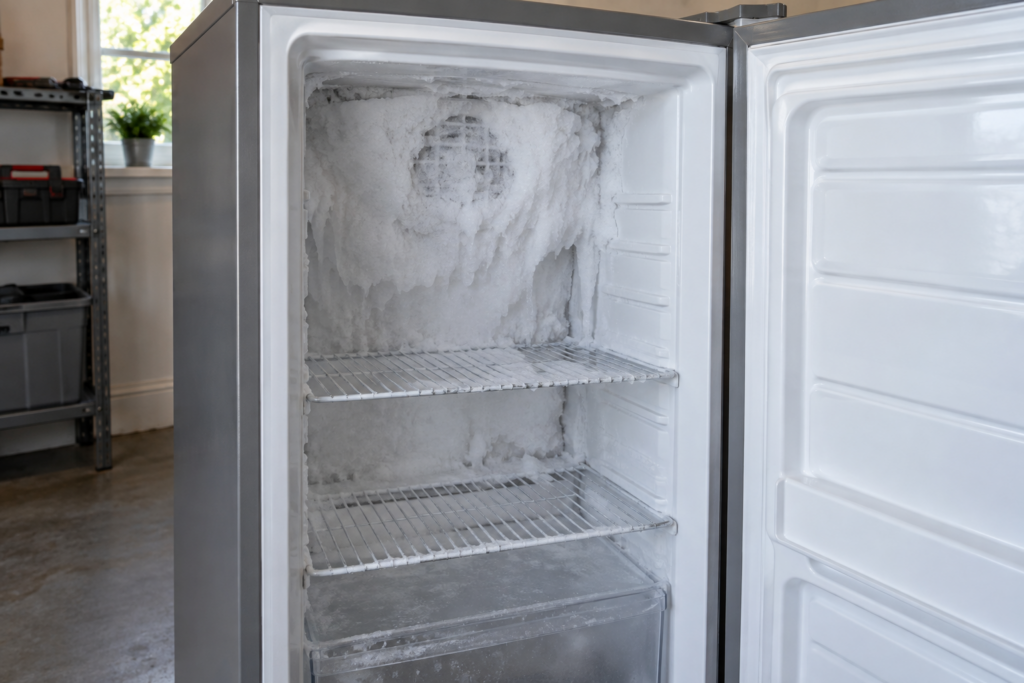
- FROST-UP describes heavy ice buildup inside the freezer, usually caused by a door seal issue or a failed defrost cycle component.
- Light frost is not an emergency; frost blocking the fan or preventing the door from sealing fully means stop using the unit.
- Never chip at heavy frost with a tool — it risks puncturing the evaporator coil and turning a frost problem into a refrigerant leak.
- A manual defrost followed by a door-seal check addresses most cases; frost that returns quickly points to a defrost system fault.
- Blocked fan airflow from heavy frost risks motor damage from overheating, not just a stalled fan.
The Bottom Line
FROST-UP is a physical condition you can see for yourself, and its severity tells you what to do: light frost can wait, but frost blocking the fan or the door means stop using the freezer and book service rather than keep chipping at it.
FROST-UP is one of the symptom alerts unique to U-Line's standalone freezer line, and it reports something an owner can usually see before the machine ever flags it: a heavy buildup of ice and frost inside the cabinet, thick enough to interfere with the fan or the door. Unlike a numbered E-code tied to a single sensor, FROST-UP describes a physical condition that carries its own real risks if it is left to grow rather than addressed early. This guide covers what causes it, what it actually threatens, and when heavy frost means stop using the freezer rather than just chip it away and move on.
| Sign | Risk level | Likely cause | What to do |
|---|---|---|---|
| Light frost on the back wall | Low — normal in some conditions | Normal humidity cycling | Monitor, no action needed yet |
| Frost thick enough to touch food | Moderate | Door seal or defrost cycle issue | Check door seal, book service |
| Frost blocking the fan | High | Defrost system failure | Stop using, book service |
| Frost preventing the door from closing fully | High | Prolonged unaddressed buildup | Stop using immediately |
Is a U-Line Freezer FROST-UP Alert Dangerous?
It depends entirely on how far the frost has progressed, which is the one alert on this list where the visible severity genuinely tells you what to do next. Light frost that has not affected airflow or the door is not an emergency. Frost heavy enough to block the fan or prevent the door from sealing fully is a different situation — at that point the freezer is both working harder than it should and losing its ability to seal properly, and continuing to run it risks compounding both problems at once.
What Actually Causes Heavy Frost Buildup
Almost always a disruption to the normal defrost cycle or a door that is letting in more humid air than the system is designed to handle.
- A door seal that is not sealing fully lets warm, humid air in continuously, which freezes onto the coldest surfaces inside the cabinet.
- A failed or stuck defrost timer means the automatic defrost cycle that normally clears light frost buildup is not running on schedule.
- The door left ajar, even briefly and repeatedly, introduces more humidity than an occasional full opening does.
- A defrost heater that has failed leaves frost to accumulate indefinitely with nothing to periodically clear it.
- A drain that has frozen or clogged keeps melted defrost water from draining, which then refreezes as extra frost.
- Frequent door openings during heavy use periods introduce more humidity than the defrost cycle is built to clear between cycles.
The Real Risks of Ignoring It
Beyond the obvious loss of usable storage space, heavy frost buildup around the fan motor forces it to work harder or can jam it outright, which risks motor damage well before the frost itself becomes the more visible problem. Frost that prevents the door from sealing fully creates a compounding cycle — more warm air gets in, more frost forms, and the door seals even less effectively than before. In the more severe cases documented on this fault list, prolonged frost buildup around the fan is flagged as a stop-using condition specifically because a jammed fan motor can overheat rather than simply stall.
How Do You Clear Heavy Frost Safely?
Turn the freezer off and let it defrost naturally with the door open, rather than chipping at the ice with a tool, which risks puncturing the evaporator coil behind the frost — a mistake that turns a frost problem into a refrigerant leak. Remove food to another freezer or a cooler during the process, and once the frost has fully melted and been wiped out, inspect the door seal before running the unit again, since a bad seal is what caused the buildup in most cases and will simply cause it again if left unaddressed.
- Power off the unit and remove the food to protect it during the defrost period.
- Let the ice melt naturally with the door open — do not chip or pick at it with a tool.
- Wipe the interior dry once the frost has fully cleared.
- Inspect the door seal with a paper-strip test before running the unit again.
- Restart the unit and monitor it for the first day to confirm frost is not returning quickly.
- Book service if frost returns within days rather than repeating the manual defrost on a loop.
When Should You Call a Technician Instead of Just Defrosting It?
If the frost returns quickly after a full manual defrost, or if it was heavy enough to have blocked the fan before you noticed it, the defrost system itself — the timer, the heater, or the sensor controlling it — likely needs attention rather than another manual defrost cycle. Freezer repair for a defrost system fault is routine work, and catching it after one manual defrost is far better than letting the cycle repeat. For the maintenance routine that keeps this from recurring, U-Line freezer maintenance covers the seal and defrost checks in more detail. If the fan has already been affected, schedule a visit rather than continue running the unit. For the wider maintenance schedule this fault also relates to, U-Line refrigerator maintenance covers the same seal-and-defrost logic on the refrigerator side of the lineup, and contact us if you are not sure which category your symptom falls into.
Does Heavy Frost Buildup Affect Food Safety?
Only indirectly, through the temperature swings it can cause rather than the frost itself. A freezer working harder to compensate for a bad seal or a jammed fan can develop uneven temperatures inside the cabinet, and food stored near a blocked airflow path may not stay as consistently cold as food elsewhere in the same unit. This is a secondary concern behind the more immediate risks to the fan motor and the door, but it is worth factoring in if the buildup has been present for a while before you noticed it.
A Brand-New Freezer Should Not Show This
Not under normal conditions. A newly installed freezer that develops heavy frost quickly usually points to an installation issue — a door not closing fully due to a leveling problem, or a seal that was damaged during delivery — rather than a defrost system that has already failed. Installation and setup is worth revisiting if FROST-UP shows up within the first weeks of a new unit's service life, since correcting a leveling or seal issue early prevents the same buildup from becoming a recurring pattern. A brand-new unit is also the easiest time to fix a leveling problem, since nothing has settled into place yet and small adjustments still make a real difference to how well the door closes. Waiting until the unit has been in place for months, by contrast, means any adjustment has to work against a door and gasket that have already taken a set in their current position.