 Ryan Caldwell
Key Takeaways
- A discarded refrigerator or freezer with its doors on can trap a child, and the risk is highest in garages, porches and curbside piles.
- Remove the doors and leave the shelves in place before the unit goes out for disposal, as the site notice advises.
- Unplug, empty and disconnect any water line first, and do not stage the old unit in a garage with its doors on.
- During a remodel, agree in writing who removes the doors and when, and check after the crew leaves.
- Leave refrigerant handling and removal to a qualified hauler or recycler, and never cut the lines yourself.
The Bottom Line
The safest old refrigerator is one with no door. Take the doors off before the unit leaves the kitchen, leave the shelves, and keep it out of reach until it is collected.
The most dangerous moment in the life of a refrigerator may come after it stops working. A unit that has been pulled out of a bar or a kitchen and left in a garage, on a porch or at the curb is a sealed box that a child can climb into, and U-Line refrigerator child entrapment is the reason this site carries a disposal notice at all. The advice in it is short, specific and easy to do, but only if it is done before the old unit leaves the house.
| Where the old unit is | Risk | What to do |
|---|---|---|
| Waiting in a garage or on a porch for pickup | A child can climb in and be trapped | Remove the doors, leave the shelves |
| At the curb or on a pickup list | The same, with less supervision | Doors off before it goes outside |
| Replaced by a new unit during a remodel | Left behind by installers or movers | Agree who removes the doors and when |
| Stored out of use in an outdoor kitchen or bar | A closed, unwatched cabinet | Remove the door or secure it, and follow the non-use notice |
| Given away or sold and still working | Low, if it is in use | Keep it intact until it changes hands |
What Is the Child Entrapment Risk With an Old Refrigerator?
It is the risk that a child climbs into a discarded refrigerator or freezer and cannot get out. The site's child entrapment and disposal notice is based on U-Line disposal and recycling safety instructions, and its action step is to remove the doors and leave the shelves in place before disposal, so children cannot easily climb inside the discarded unit.
The risk is about opportunity. A refrigerator in use is in a kitchen with adults around, but a discarded one is in a garage, on a lawn or in a curbside pile, where the attraction of a big empty box is real and supervision is thin. Taking the doors off removes the part that closes.
What to Do Before Disposal
The steps are simple, but they have an order, and the first two are about safety rather than tidiness. If you are unsure of any step, leave it to the person removing the unit.
- Unplug the unit and, if it has a water line, shut off the supply and disconnect it as your installer or owner's manual describes.
- Empty it completely, including shelves, drawers and any ice, and drain any water.
- Remove the doors before the unit leaves the kitchen or the house.
- Leave the shelves in place, as the notice says, so a child cannot easily climb inside.
- Store it on its back or upright out of reach until pickup, and do not leave it in an open yard.
Where the unit is built into cabinetry, remove it with the door off in its own space rather than standing it in an open area. If you are not removing it yourself, ask the installer to do it, and confirm it in writing so there is no doubt about who takes the doors off.
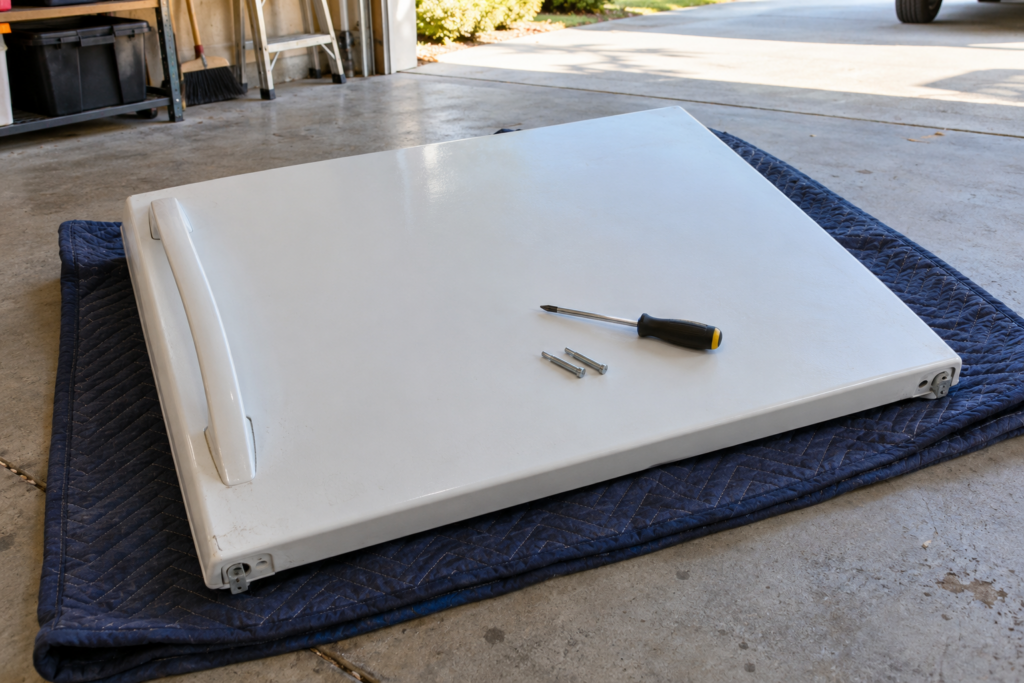
During a Remodel or Replacement
Remodels are where old units get left behind. A refrigerator is pulled out on the first day, the new one arrives weeks later, and in between the old one sits in a hallway or a garage with its door on. The fix is a decision made in advance about who removes the doors and when.
- Put it on the work order: doors removed before the unit leaves the kitchen.
- Do not stage it in a garage, shed or porch even for a day or two without the doors off.
- Check after the crew leaves, since a unit can be moved out of sight and forgotten.
- Tell the hauler that the doors are removed so it is not rejected at pickup.
If you are replacing a unit because it failed, our guide to U-Line refrigerator repair or replace helps you decide whether replacement is the right call, and the installation and setup page covers fitting the new unit.
What About Units Stored Out of Use?
An old U-Line unit does not have to be discarded to be a risk. Indoor models in bars and outdoor kitchens are sometimes shut down for a season or left unplugged for good, and a closed unit with the power off is as much a trap as one at the curb. The freezer winterization and non-use notice covers shutting a unit down properly, and the same thinking applies to its door.
The simple rule is that a unit not in daily use should not have a closed door a child can reach. Remove the door, or keep the room locked, until the unit is back in service or on its way out. Three situations catch people out:
- A seasonal shutdown of an outdoor or bar unit, where the door is left shut to keep out pests and dust.
- A spare unit in a garage kept for parties or overflow, unplugged most of the year.
- A unit awaiting repair or sale, moved aside while a decision is made.
In each case the answer is the same: if it is not running, the door should not be able to close on a child. Make that part of the shutdown routine, and put it on the same list as draining water lines and cleaning the interior, so it is done every time and not only when you remember.
Who Should Remove and Recycle It?
A qualified hauler or recycler should, and the refrigerant circuit is not something to open yourself. Refrigeration systems contain refrigerant and oil that must be handled by someone equipped to recover them, so cutting lines or breaking components to make a unit easier to carry is a mistake. Most municipal programs and appliance recyclers have their own rules, so ask them what they require before pickup.
Taking the doors off is the one step that belongs to the owner, and it is within reach of a screwdriver in many cases. If the doors are fitted with panels, hinges or custom trim, ask a technician instead of forcing anything. Our U-Line refrigerator safety guide and the freezer safety guide cover the everyday safety side.
Getting Help With the Old Unit
If the unit is a built-in fitted with custom panels, or you are not comfortable removing a door yourself, it is worth getting help rather than leaving it for later. A technician can remove the doors safely as part of a replacement or decommissioning visit. To arrange one, schedule a visit and say that the unit is being retired and the doors need to come off. For anything else about the unit, contact us and we will point you to the right page.