 Ryan Caldwell
Key Takeaways
- BIN-ARM is a service symptom with no dedicated code on screen: the bin arm sits raised when it should not.
- On most crescent-style machines the arm tells the machine when the bin is full, so a raised arm can stop ice production.
- Check the bin, move the arm by hand, clear anything touching it, and restart once; do not keep power-cycling.
- Front airflow, condenser cleanliness, level installation and water hookup are the basics to confirm first.
- Book service if the arm keeps returning to the raised position or output is affected after the basic checks.
The Bottom Line
A stuck bin arm is a find-it-by-looking fault. Check the bin, free the arm, confirm the basics, and book a diagnosis only if it keeps coming back.
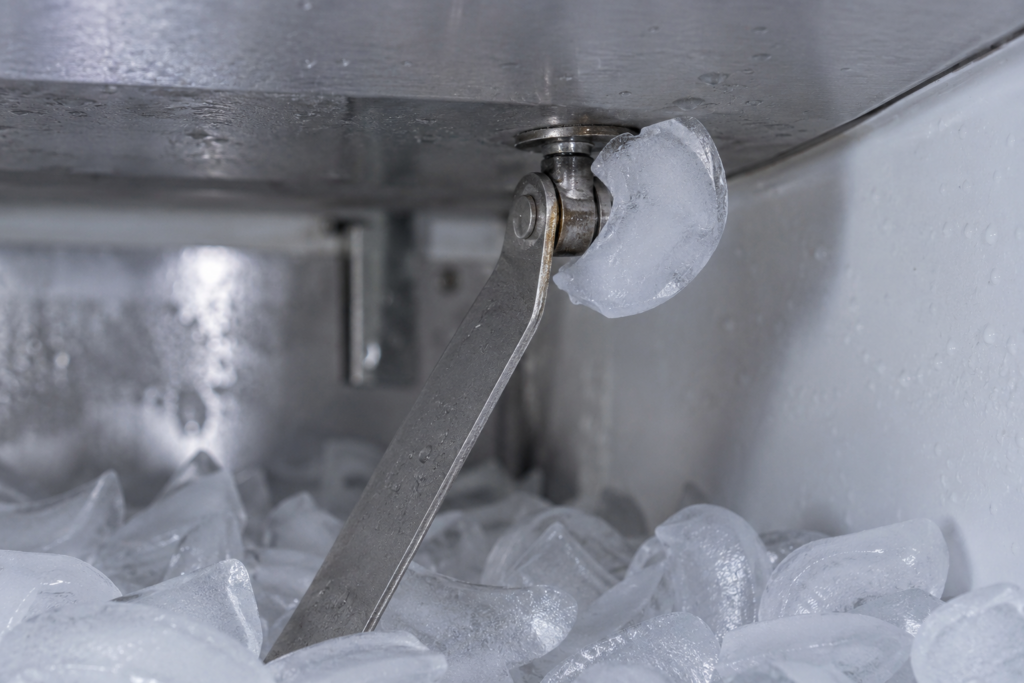
A crescent ice machine that stops making ice while the bin is nearly empty is easy to blame on the machine and hard to diagnose from the outside. One of the odder causes has a plain name on this site: BIN-ARM, a bin arm stuck up. Nothing is displayed, nothing leaks, and the unit sounds idle, so a U-Line crescent ice machine bin arm that will not drop is the kind of fault you find by looking into the bin rather than by reading a screen.
| What you see | What it points to | First move |
|---|---|---|
| Bin nearly empty, machine idle, arm raised | Arm held up, so the machine may read the bin as full | Check whether the arm moves freely |
| Bin genuinely full | Normal behavior | Nothing to fix |
| Arm raised after a recent clean-out | Arm not reseated | Reposition it carefully |
| Arm moves but production is still low | A different fault | Move to the LOW-OUT or NO-ICE page |
| Problem returns after every reset | Setup, water or a model-specific control issue | Book a diagnosis |
What Does BIN-ARM Mean on a U-Line Crescent Ice Machine?
It means the bin arm is sitting in the raised position when it should not be. This site's BIN-ARM page lists it as a real service symptom on crescent ice machines, with no dedicated electronic code shown, and it points to setup and maintenance as the first suspects: airflow, sealing, levelness, cleaning and water hookup.
On most crescent-style ice machines a bin arm or a bin-level sensor tells the machine when the storage bin is full, so that it stops making ice. If the arm is held in the raised position, the machine can behave as though the bin is full. The site's page does not spell out the mechanism for each model, so treat that as the general principle and confirm it for yours.
Why Would the Machine Stop Making Ice With the Arm Up?
Because the arm is what the machine uses to decide whether more ice is wanted, and a raised arm is the signal it would see with a full bin. The result is an idle machine, an empty-looking bin and an owner who assumes the water or the compressor has failed.
That is why the first look should be inside the bin and not at the controls. A few ordinary things can hold the arm up or make it stick: a piece of ice caught against it, a bridge of cubes, a pivot that has stiffened with mineral buildup, or an arm that was knocked out of position when the bin was cleaned.
Checks in Order
Work through these before you assume a part has failed, and stop as soon as the machine resumes. They are the checks the site's pages and the service page keep returning to.
- Look at the bin. Confirm whether it is actually full; if it is, the arm is doing its job.
- Move the arm gently by hand and watch whether it swings freely and returns, or catches and stays up.
- Clear anything touching the arm, such as a clump of ice or a stray cube, and wipe away any film at the pivot.
- Restart the machine once. The page says a restart can clear a temporary state, but a recurring issue still needs diagnosis.
Do not keep power-cycling the unit after the same problem returns. The page is direct about it: recurring problems need diagnosis, not endless restarts.
The Basics That Sit Behind Most Ice Machine Complaints
This site's service page notes that U-Line guides and service manuals emphasize the same short list of fundamentals, and that these have to be confirmed before anyone discusses a board, a sensor or a valve. They apply to a crescent machine as much as to anything else.
- Front airflow: the grille and the space in front of it should be clear so the condenser can shed heat.
- Condenser cleanliness: a dusty condenser reduces output and can mimic other faults.
- Level installation: an unlevel machine can affect how ice forms and drains; see our guide to U-Line ice machine leveling and the LEVEL-CHK page.
- Water hookup: a supply that is off, kinked or restricted changes how much ice the machine can make.
What Not to Do
A stuck arm invites the wrong kind of help. Because the machine looks idle rather than broken, owners tend to force something, and the damage from forcing is the part that turns a free fix into a service call.
- Do not bend or pry the arm to hold it down; if it will not move freely, the cause is at the pivot or in the ice around it.
- Do not use sharp tools or heat to free ice near the arm, since the bin liner and sensor parts are easily damaged.
- Do not remove panels to look for the cause; the site's safe checks stop at what you can reach without tools.
- Do not run the machine unattended if water is appearing anywhere it should not.
Is It Safe to Keep Using the Machine With the Arm Stuck Up?
Yes, as far as the page goes. It says to continue using the product only while it still preserves ice safely and without leaking, which means the practical limit is water, not electricity. A machine that is simply idle with a raised arm is not dangerous.
Stop and call if you see water leakage, recurring alerts, or the ice that is stored starting to melt or soften. Those are the stop signs the page lists for every ice and refrigeration product on this site, and they apply here too.
When to Book Service
Book when the arm keeps coming back up after the checks, or when the machine's output is affected and cleaning, leveling and a restart have not changed anything. The page's own test is the same: the same symptom returning after basic checks, or an issue now affecting real performance, not just a display.
The BIN-ARM page lists a typical repair cost from $100, about 55 percent of cases as owner-fixable and a professional repair time of 20 to 45 minutes. Treat those as orientation rather than a quote: the crescent ice machine repair page confirms pricing only after the exact model and fault are diagnosed on site, with a written estimate before any work begins. Representative models on that page include the BI1215 and 1000 Series crescent models.
Our crescent ice machines not working guide covers the broader set of causes if the arm turns out not to be the problem, and the crescent maintenance guide shows how to keep the bin and the arm clean. To have it looked at, schedule a visit and say that the bin arm is staying up.